Blue Nile Painting Ltd. · Service information: Sameh Said
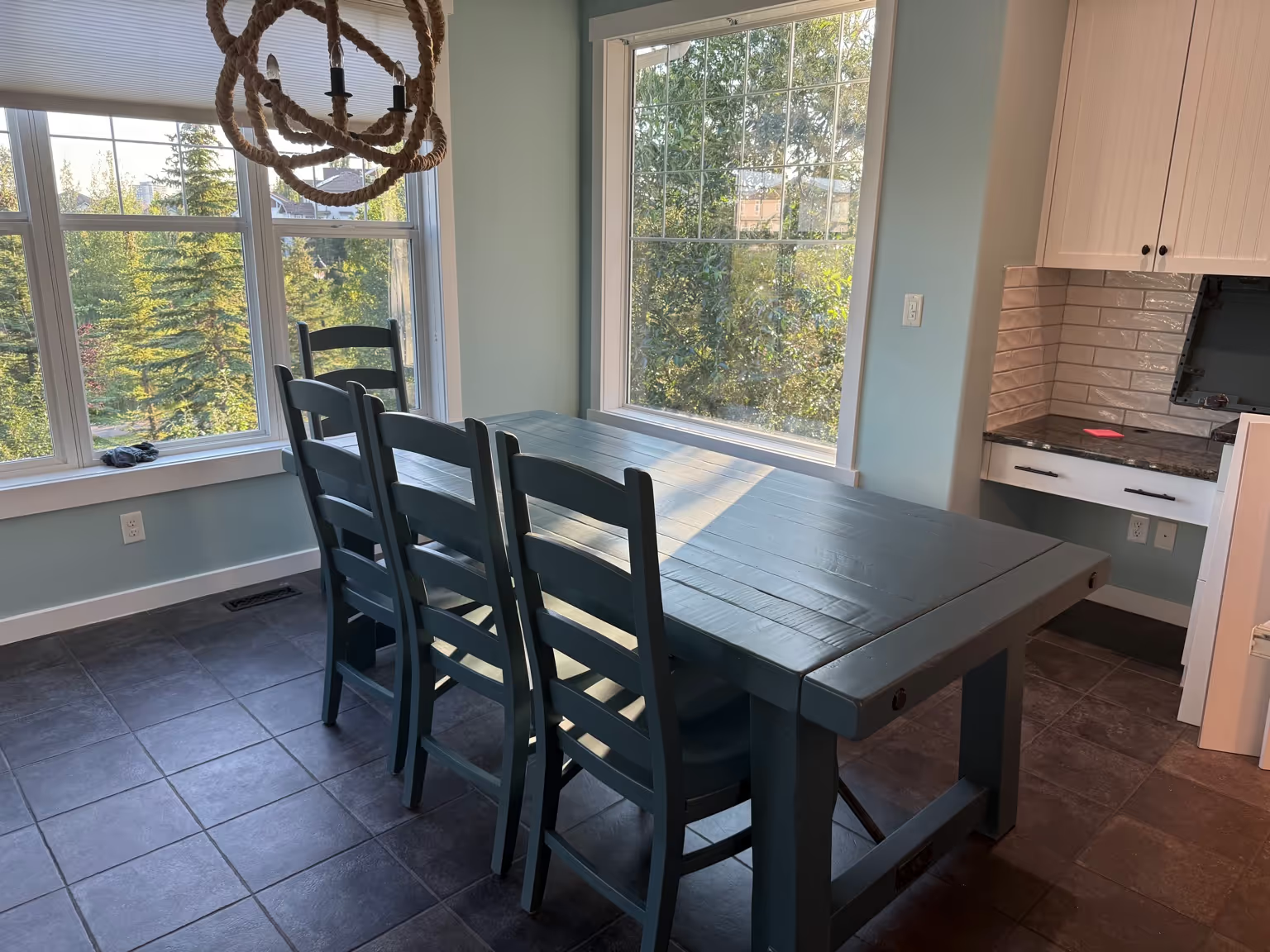
Header photograph: a Blue Nile interior painting example, not wallpaper-removal progress.
Wallpaper removal is a separate part of an interior painting scope. Taking off the covering does not tell you how much preparation the exposed wall will need. Before comparing estimates, identify the walls involved, the finish you want next and the repairs that may need assessment.
Blue Nile Painting offers wallpaper removal, skim coating and plaster-wall repairs. The appropriate preparation depends on the existing surface. For the broader repaint, see our interior painting services.
List each room or commercial area and identify the walls with covering. Include approximate dimensions, access around built-ins or furniture, and whether any wallpaper has already been partly removed. Close-up photographs help show seams, lifting edges, previous patches and damaged corners; wide photographs show the working space.
Explain whether the next finish will be paint or new wallpaper. These are different finishing scopes. If a feature wall will receive new wallcovering while surrounding walls are painted, mark those areas separately.
The wallcovering and the adhesive underneath both matter. A small test area can help establish how the covering releases and what preparation the wall will need. Removal should not be priced on the assumption that every sheet will peel away cleanly.
Ask how adhesive residue will be addressed before repairs and the final finish. The surface needs to be prepared for the selected system, including any compatible sealer required for the remaining condition. Primer selection should follow the product instructions and the actual substrate; a generic coat of paint is not a substitute for that assessment.
A few damaged spots may need local filling and refinement. More widespread surface damage may call for broader skim coating. Ask the estimate to distinguish the two rather than describing all preparation simply as “patching.”
Skim coating is a surface-finishing step. It should not be assumed to resolve loose plaster, recurring cracks or an underlying moisture problem. Identify known leaks or repeated failures during the assessment so the scope reflects the condition underneath.
Where torn drywall facing, damaged corners or earlier patches are involved, discuss our drywall repair and surface preparation service. Plaster-wall repairs should be assessed for their own condition rather than treated as identical to a drywall patch.
Confirm who will move furniture, clear shelves and take down wall-mounted items. Note fixed cabinets, counters, flooring and nearby finishes that need protection. Preparation and drying can affect when an area is available; confirm the sequence for the actual project instead of relying on a universal number of days.
A useful written scope separates removal, adhesive treatment, repairs, preparation and the final paint or wallcovering. It should explain how additional repairs found after removal will be reviewed and approved. Colours, sheen and products should be recorded for the surfaces included.
Identify customer routes, staff work areas and displays or merchandise close to the affected walls. Share preferred work windows and any access restrictions before dates are discussed. These are inputs for a proposed schedule, not a guarantee of evening availability or uninterrupted operation.
For the wider project, use our commercial interior repaint planning guide. It covers the larger surface-and-access brief; this article focuses on wallpaper removal and the wall condition that follows.
No. The exposed condition determines whether local repairs or broader surface refinement are appropriate. A test area and assessment are more useful than assuming a single approach for every wall.
Photographs help explain the project, but a walkthrough or test area may still be needed to confirm the covering, adhesive and wall condition. Share any partly stripped areas and known previous repairs.
Yes. List it as a separate preparation item within the full-house repaint plan, so the removal and repairs are distinguished from the final painting.
To discuss your project, send Blue Nile Painting your wall photographs and scope details or call 780-244-1538. Dates and the final preparation scope should be confirmed after review.