
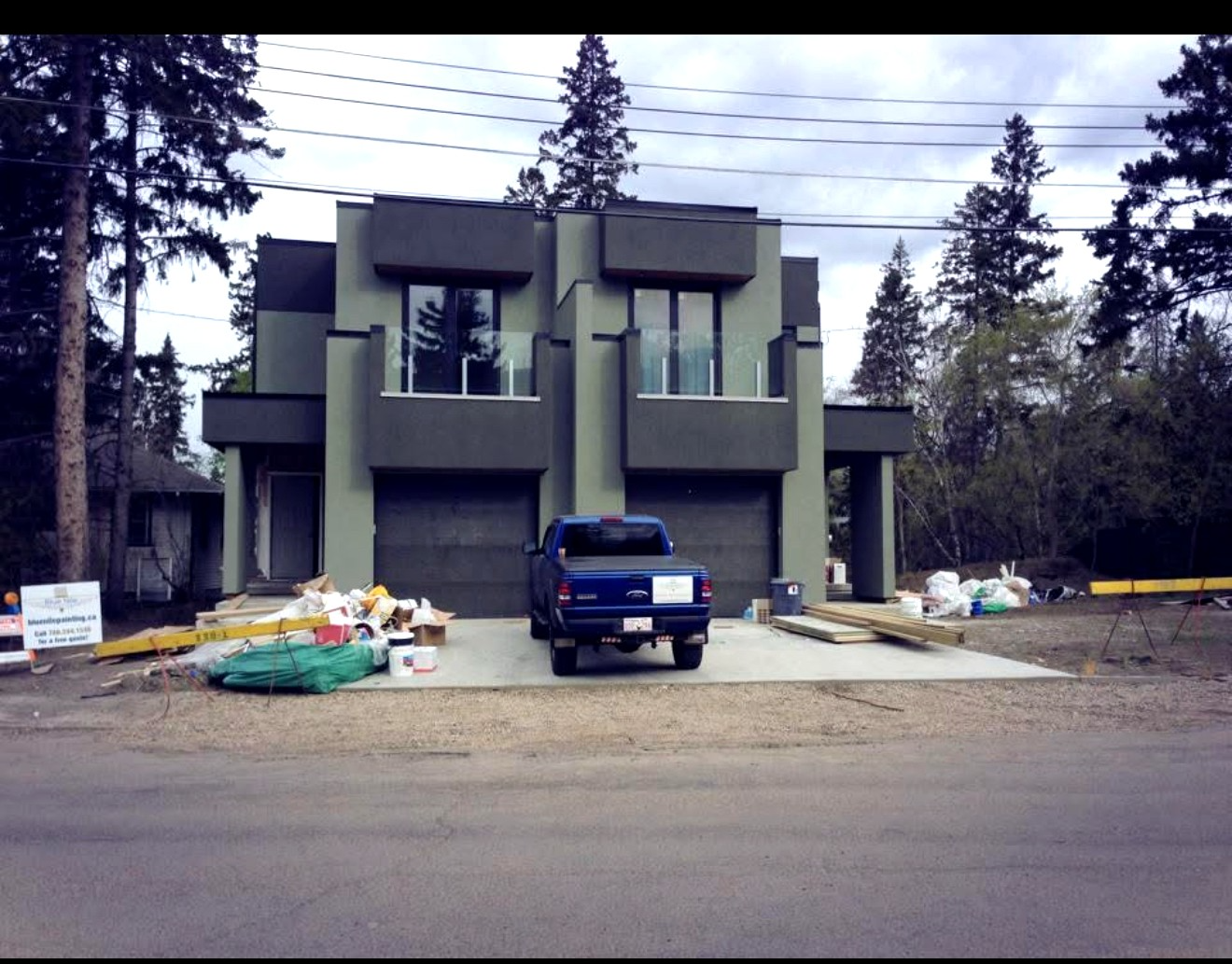
Stucco is porous and textured. That means:• It holds dust and chalking (you must wash it properly)• Cracks can expand and contract with freeze/thaw cycles• Texture increases surface area — it uses more paint• Repairs and patching must be done before coating Because stucco hides small dents, people underestimate prep — but paint failure shows quickly if the surface wasn’t cleaned and sealed correctly.
Stucco pricing in Edmonton usually changes based on:• Height and access (2■storey peaks, tight side yards, steep roofs)• Masking needs (stone/brick, windows, landscaping, decks)• Crack repairs and patching (hairline vs wider cracks)• Chalking level (how much washing and sealing is required)• Color change (dark-to-light often needs more coats)• Coating system choice (standard acrylic vs elastomeric)• Detail areas (trim, fascia, doors) included or excluded
Use these as sanity checks:
• Small bungalow: $5,500–$10,500
• 2 storey typical: $8,500–$18,000
• Large/complex homes: $18,000–$35,000+Common add-ons:
• trim/fascia/soffits/doors/garage door
• decks/railings/fences
• heavy repairs or stucco patching
• significant color changes or extra coats
A professional stucco job should include:
1) Wash / surface cleaning
• Remove dirt, chalk, and mildew
• Rinse thoroughly and allow full dry time
2) Crack repair and patching
• Repair cracks and damaged areas
• Allow repairs to cure
3) Seal/prime where required
• Use masonry primer or conditioner when needed
• Spot-prime repairs and porous areas
4) Caulking (only where appropriate)
• Around windows/doors/trim joints — not every texture line5) Protect and mask
• Windows, stone/brick, lights, concrete, landscaping6) Two topcoats
• Even coverage on texture (often spray + back roll)
• Correct dry time between coats
Two common systems are used on stucco:
A) High-quality exterior acrylic (most common)
• Great performance when surface is properly cleaned and sealed
• Often the best balance of cost and durability
B) Elastomeric coating (thicker, bridges small cracks)
• Useful when hairline cracking is common
• Can help hide minor imperfections
• Typically higher cost and requires correct prep Important:
Elastomeric is not a “magic fix” for failing stucco. If the surface is chalky or repairs are failing, coating over it will still fail.
Delay painting if:
• Stucco is wet or moisture is trapped (must dry fully)
• Temperatures are too low for proper curing
• You have ongoing water intrusion (fix cause first)
• Repairs are not cured
• Surface is heavily chalking and hasn’t been properly cleaned/sealed
Typical timelines:
• Bungalow stucco: 3–5 working days
• 2 storey stucco: 5–8 working days
• Large/complex: 1–3 weeks
What slows it down:
• wash + dry time
• repairs and curing
• weather windows (wind/rain/cold nights)
• heavy masking and detail work
Be careful if:
• No wash/cleaning step is included
• No crack repair plan is included
• No primer/conditioner plan for chalky stucco
• “One coat” is offered without explanation
• Contractor ignores weather windows
• No protection/masking details
• No WCB/insurance proof
To get a clear stucco quote quickly, send:
• Photos of all sides (wide)
• Close-ups of cracks and damaged areas
• Notes on included items (stucco only vs stucco + trim/doors)
• Color change goal
• Access notes (tight side yards, high peaks)
• Desired timing (month/week)
• Should I use elastomeric? Sometimes — but only after proper wash + repairs and if cracking is common.
• How long does stucco paint last? A quality system can last many years, but failure happens early when prep is skipped.
• Is spray OK on stucco? Yes, often best — but many jobs still need back roll for even coverage.
• Can you paint in cold weather? Only within coating temperature limits and stable weather windows.